Amazing Astronomical Backgrounds: Your Cosmic Design Toolkit
There’s a specific kind of visual problem that comes up in design projects: the need for depth, scale, and wonder without resorting to cliché stock photos or overwhelming your layout. You’re building a hero section for a tech startup, creating a mood board for a wellness brand, or designing a series of social media posts about innovation. The backdrop needs to feel expansive, intelligent, and slightly mysterious. This is where a resource like the Amazing Astronomical Backgrounds collection becomes a practical asset rather than just another decorative element.
What This Collection Actually Is
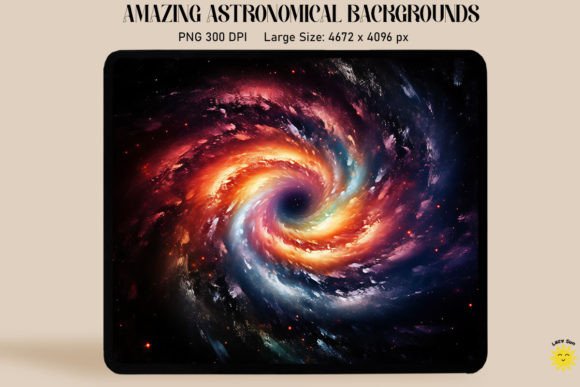
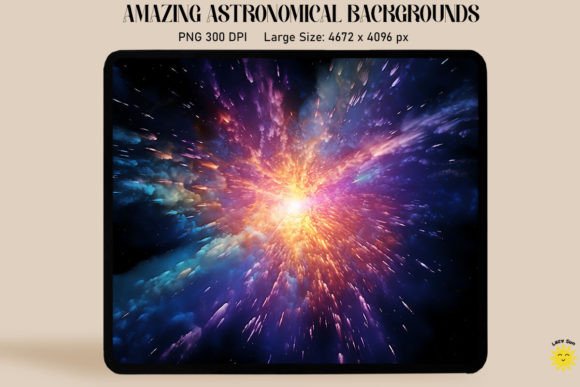
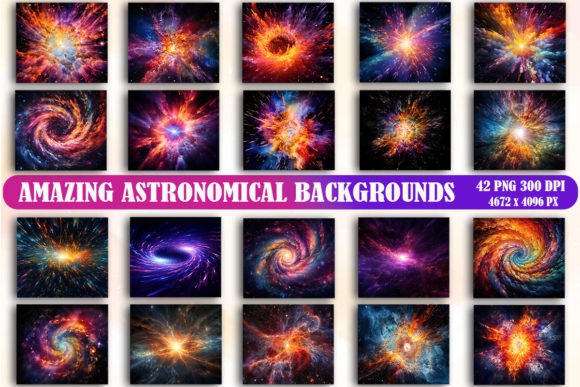
Let's be clear from the start. This isn't a font family. It's a curated set of 42 high-resolution PNG files (at 300 DPI, sized around 4672 x 4096 pixels) designed to function as visual backdrops. Think of them as the galactic backdrop or cosmic scenery layer in your compositions. The files feature abstract interpretations of astronomical phenomena—nebulae, star fields, cosmic dust, and the subtle gradients reminiscent of the Cosmic Microwave Background. The style leans towards a blend of realistic space imagery and artistic abstraction, offering textures that feel both vast and intimate. They are delivered as a ZIP file, which is standard for digital assets of this size.
The appeal lies in their versatility as a design asset. Because they are high-resolution PNGs, they can be scaled down for a small web banner or used as a full-bleed print background without pixelation. The color palettes often feature deep blues, purples, and blacks, punctuated by luminous highlights in gold, pink, or teal. This creates a sophisticated, modern aesthetic that avoids the garish neon often associated with "space themes."
Where These Astronomical Backgrounds Shine
For a logo design presentation, placing a sleek, minimalist wordmark over one of these universe backdrops can instantly communicate innovation, future-thinking, and scale. It gives the brand a sense of context—positioning it within a larger, exploratory narrative. In editorial design, such as the cover of a science fiction novel, a tech magazine, or a business report on emerging trends, these backgrounds provide a powerful visual metaphor for the unknown, the innovative, or the interconnected.
They are particularly effective in digital realms. As web design backgrounds, they must be used judiciously to maintain readability. A semi-transparent overlay or using the background in a contained section (like a hero area) works best. For social media graphics, they are perfect for quote cards, announcement posts, or story backgrounds where you need instant visual impact that stops the scroll. The astral landscape style adds a layer of professionalism and creativity to a feed.
For physical applications, think packaging design for luxury or tech products—imagine a sleek black box for headphones with a subtle, cosmic texture. They are also ideal for event materials: invitations for a gala, certificates for an award, or banners for a conference themed around innovation and the future. Crafters and hobbyists will find them useful for scrapbooking, card making, and custom wall art, where the astral beauty can be a stunning focal point.
Integrating Cosmic Elements Into Your Brand and Projects
Choosing to use such a strong visual element is a strategic decision. It influences brand perception immediately. A cosmic background suggests something expansive, forward-thinking, and connected to larger ideas. It’s a bold choice for a brand identity that wants to stand out from flat, minimalist trends. However, consistency is key. If you use one of these backgrounds for your website hero, consider how a simplified version or a color extracted from it can be used in other materials—like a business card or a social media profile—to maintain a cohesive look.
When evaluating fit for a project, consider the core message. Is the project about innovation, exploration, mystery, or the future? If yes, an astronomical background can be a powerful ally. For a project about tradition, warmth, or earthiness, it might create a disconnect. Always test the background with your actual content—your text, logos, and other graphic elements. Does the text remain legible? Does the background compete with or complement your primary message?
Font pairing becomes crucial here. Overlaying a delicate script font on a busy nebula might get lost. A strong, clean sans serif font or a bold display font will hold its own against the visual complexity. This is where understanding visual hierarchy is essential: the background sets the stage, but the foreground elements must command attention through contrast, size, and placement. Using these backgrounds effectively is less about the files themselves and more about your skill in composition and layering. They are a premium tool in your toolkit, offering a universe of possibilities when applied with thoughtful design principles.